On this page:
- Disease it protects against
- Why getting vaccinated is important
- Who should get vaccinated
- How to get vaccinated
- How the vaccine is given
- Why you need the vaccine every year
- Types of influenza vaccines
- Virus strains the 2024-2025 vaccines protect against
- Influenza vaccine safety and side effects
- Who should not get the vaccine
- Immunization aftercare
- Influenza (flu) quick facts
- Posters
Read the Influenza (Flu) Vaccine HealthLinkBC Files
Available in 繁體中文 (Traditional Chinese), عربى (Arabic), یسراف (Farsi), 한국어 (Korean), ਪੰਜਾਬੀ (Punjabi), and other languages.
Disease it protects against
- Influenza (flu)
Why getting vaccinated is important
There are many reasons to get an influenza vaccine:
- Vaccination is the best way to reduce your chances of getting influenza.
- It lowers your risk of developing complications from influenza that can lead to severe illness, hospitalization, and even death.
- Several studies show that people who catch influenza after being vaccinated are less likely to have severe illness.
- Vaccination can help prevent the spread of influenza to others, which can help protect the people around you.
Did you know?
Who should get should vaccinated
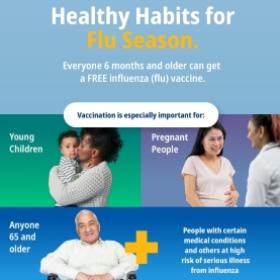
- People at high risk of serious illness from influenza
-
People at high risk of serious illness from influenza include:
- Children 6 months to less than 5 years of age
- Pregnant people at any stage of pregnancy during the influenza season (typically spanning Nov-Apr)
- Seniors 65 years and older
- Residents of any age living in residential care, assisted living or other group facilities
- Children and teenagers required to take Aspirin® or ASA for long periods of time due to a medical condition
- Children and adults who are very obese
-
Children and adults with certain medical conditions, including:
- Heart or lung disorders that require regular medical care, such as asthma, chronic obstructive pulmonary disease or cystic fibrosis
- Kidney disease, chronic liver disease such as hepatitis, diabetes, cancer, anemia or weakened immune system
- Those with health conditions causing difficulty breathing, swallowing or a risk of choking on food or fluids, such as people with severe brain damage, spinal cord injury, seizures or neuromuscular disorders
Indigenous Peoples may be at increased risk of serious illness from influenza due to health inequities resulting from colonialism. - People able to spread influenza to those at high risk
-
People able to spread influenza to those at high risk of serious illness from influenza include:
- Household contacts (including children) of people at high risk
- Household contacts, caregivers and daycare staff of children under 5 years of age
- Doctors, nurses and others working in health care settings, including long-term care facilities, who have contact with patients
- Visitors to health care facilities and other patient care locations
- Inmates of provincial correctional institutions
- Those who provide care or service to people at high risk in potential outbreak settings such as cruise ships
- Other groups
-
Other groups who the vaccine is specifically recommended for include:
- People who provide essential community services, including police officers, firefighters, ambulance attendants, and corrections workers
- People who work closely with influenza susceptible animals, including poultry, dairy and swine industry workers
How to get vaccinated
Did you know?
It takes about 2 weeks after vaccination for antibodies to develop in the body and provide protection against influenza virus infection. That's why it's best to get vaccinated before influenza viruses start to spread in your community.
How the vaccine is given
Why you need the vaccine every year
- Influenza viruses are constantly changing, so vaccines are updated each year to protect against the viruses that are expected to spread during the upcoming season.
- Protection from the influenza vaccine can decrease with time, so you need a new one every year to stay protected.
Types of influenza vaccines
- Inactivated influenza vaccines: These vaccines are made of killed influenza viruses or parts of the viruses and are given by injection.
- Live attenuated influenza vaccine: This vaccine is made from weakened influenza viruses and is given as a nasal spray.
Enhanced influenza vaccines for adults 65 years and older
Virus strains the 2024-2025 vaccines protect against
- A/Victoria/4897/2022 (H1N1) pdm09-like virus.
- A/Thailand/8/2022 (H3N2)-like virus (new this year).
- B/Austria/1359417/2021-like virus.
- B/Phuket/3073/2013-like virus (in quadrivalent vaccines only).
Influenza vaccine safety and side effects
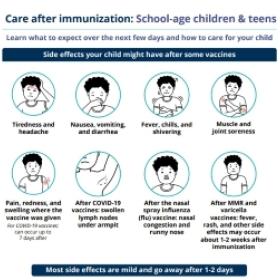
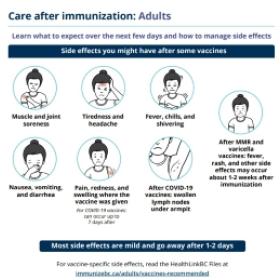
- Side effects of the inactivated influenza vaccine
-
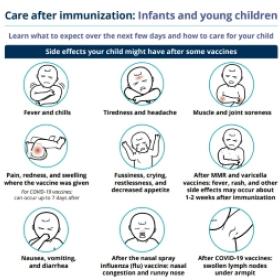
Common reactions to the vaccine include soreness, redness and swelling where the vaccine was given. Other symptoms, that may last 1 to 2 days, can include:
- Fever
- Headache
- Muscle or joint soreness
- Fatigue
- Nausea
- Vomiting
- Diarrhea
- Chills
Babies and young children may be irritable, sleepy and have a decreased appetite. Fewer than 1 in 20 people may have oculo-respiratory syndrome (ORS). Symptoms of ORS include red eyes, a cough and/or sore throat and/or hoarseness. - Side effects of the live attenuated influenza vaccine
-
This vaccine contains weakened influenza viruses and may cause mild influenza symptoms, but these are much milder than those due to influenza infection. Symptoms may include a runny or stuffy nose, cough, sore throat and fever.Other symptoms can include:
- Headache
- Decreased appetite
- Weakness
- Muscle soreness
- Chills
- Vomiting
- Stomach ache
- Irritability
Who should not get the vaccine
- Who should not get the inactivated influenza vaccine?
-
Speak with your health care provider if you:
- Had a life-threatening reaction to a previous dose of influenza vaccine or any part of the vaccine (people with egg allergies can be safely immunized)
- Had severe oculo-respiratory syndrome after a previous dose of influenza vaccine
- Developed GBS within 8 weeks of getting any influenza vaccine without another cause being identified
Children less than 6 months of age should not get the vaccine because it is not known to be effective at this age. - Who should not get the live attenuated influenza vaccine?
-
Children less than 2 years of age, and people who are pregnant, or planning to become pregnant, should not get the vaccine.Speak with your health care provider if you or your child:
- Has an immune system weakened by disease or medical treatment
- Has severe asthma or active wheezing
- Had a life-threatening reaction to a previous dose of influenza vaccine, or any part of the vaccine (people with egg allergies can be safely immunized)
- Developed GBS within 8 weeks of getting any influenza vaccine without another cause being identified
- Is required to take Aspirin® or ASA for long periods of time due to a medical condition
People who will have contact with anyone who has a very weak immune system, such as a bone marrow transplant patient, within 2 weeks of being immunized should receive the inactivated influenza vaccine. If such contact can be avoided, they may receive LAIV.
Did you know?
The inactivated influenza vaccine given by injection cannot give you influenza. The vaccine contains killed influenza viruses or parts of the viruses that cannot cause infection. The live attenuated influenza vaccine, which is given as a nasal spray, contains weakened influenza viruses. Common reactions to the live vaccine include mild symptoms such as a runny nose, nasal congestion, cough, sore throat and fever. These symptoms are less severe than those from influenza infection and last a shorter time. As a precaution, people with weakened immune systems should not get the live vaccine.
Influenza (flu) quick facts
- What it is
-
Influenza is an infection of the respiratory system caused by the influenza virus.
- How it spreads
-
Influenza spreads easily from person to person through coughing, sneezing or having face-to-face contact. The virus can also spread when you touch tiny droplets from a cough or sneeze on another person or object and then touch your eyes, mouth or nose before washing your hands.
- Symptoms
-
Influenza symptoms vary from mild to severe, and can include:
- Fever,
- Headache,
- Muscle pain,
- Runny nose,
- Sore throat,
- Extreme tiredness,
- A cough.
Children may also experience nausea, vomiting or diarrhea. Although infections from other viruses may have similar symptoms, those due to the influenza virus tend to be worse with a greater risk of complications.Symptoms can begin about 1 to 4 days, an average of 2 days after a person is first exposed to the influenza virus. Fever and other symptoms can usually last up to 7 to 10 days, but the cough and weakness may last 1 to 2 weeks longer. - Risks
-
Getting sick with influenza also puts you at risk of other infections. These include viral or bacterial pneumonia, which affects the lungs. The risk of complications can be life-threatening. Seniors 65 years and older, infants and very young children, people who have lung or heart diseases, certain chronic health conditions or weakened immune systems are at much greater risk.Healthy pregnant women in the second half of their pregnancy are at much greater risk of hospitalization following infection with influenza virus.In Canada, thousands of people are hospitalized and may die from influenza and its complications during years with widespread or epidemic influenza activity.